

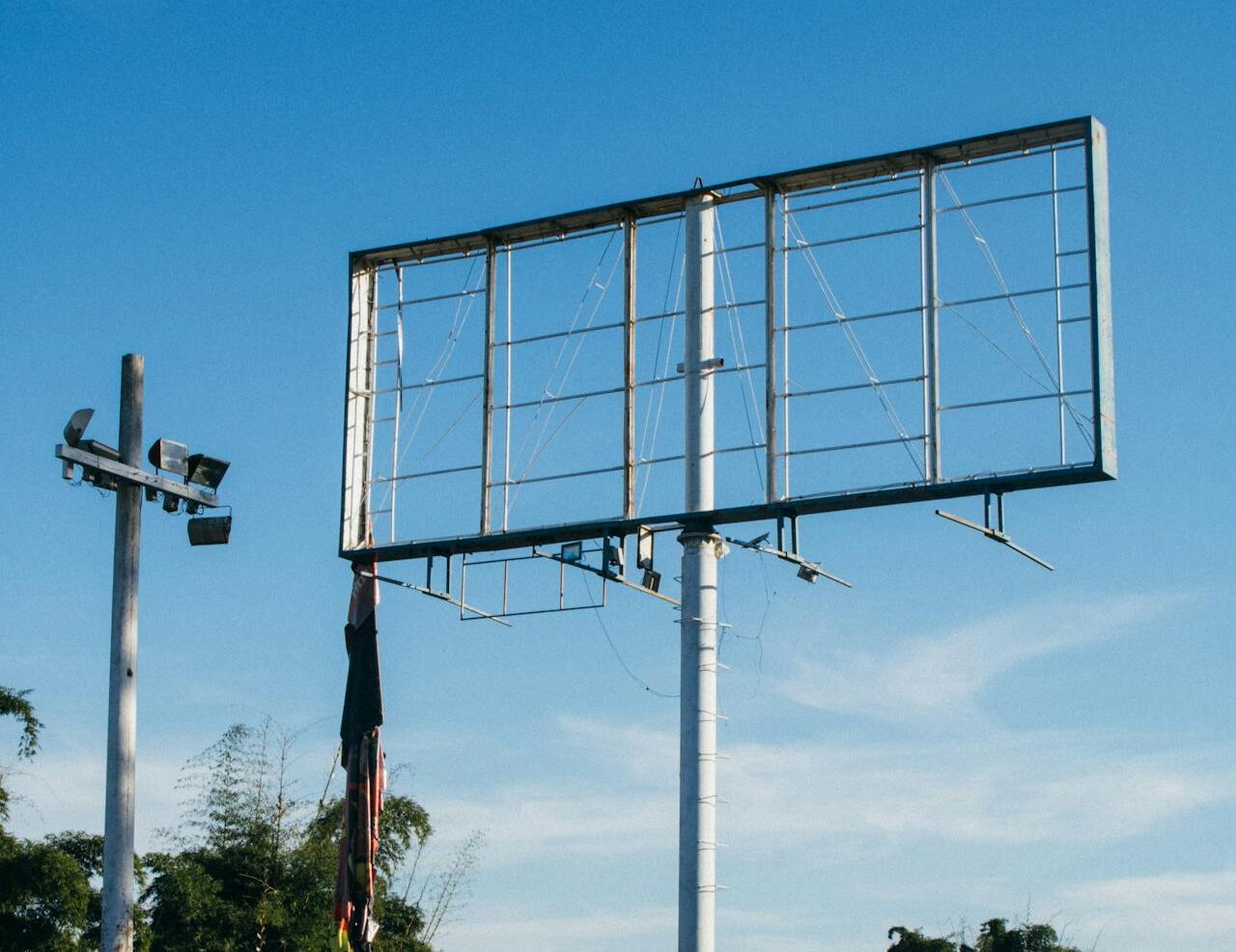
Outdoor advertising has evolved significantly over the years. What once began as simple roadside billboards aimed at travelers has blossomed into a dynamic, multifaceted medium that spans a wide array of locations, from urban rooftops to digital screens in airports. The traditional roadside billboard still holds sway in the advertising world, but the canvas for outdoor advertising has expanded far beyond that. As cities grow and technology advances, advertisers are finding new ways to captivate audiences—by utilizing every available surface, every corner of the urban environment, and every moment of attention.
This article explores the journey of billboard advertising, from its humble roadside origins to the creative and impactful displays on rooftops, building facades, public transit, and even digital platforms. Let’s take a look at how this medium is continuously evolving and how it’s pushing the boundaries of traditional advertising.
The Classic Roadside Billboard: The Birth of Outdoor Advertising
The billboard, in its most traditional form, began as a roadside staple. Its large, static format was designed to catch the eye of drivers, truckers, and pedestrians. Emerging in the late 19th century, roadside billboards originally served as giant advertising tools that simply needed to capture attention through large text and bold imagery.
These billboards were usually painted by hand, often featuring nothing more than the name of a product, a catchy tagline, or a simple logo. Despite their simplicity, they were remarkably effective at reaching a wide audience. The beauty of roadside billboards lay in their constant presence—they couldn’t be avoided by simply changing the channel or scrolling past them. Drivers had no choice but to glance at the advertisements, making this form of outdoor marketing highly impactful.
But the world has changed. As cities became denser and technology advanced, advertisers began to look beyond the familiar roadside locations for opportunities to further extend their reach.
Rooftop Billboards: A New Frontier
The arrival of rooftop billboards marks a dramatic shift in how outdoor advertising is approached. Cities are becoming more vertical in nature, with buildings reaching higher and higher into the sky. This growth has led to an explosion in the potential for rooftop advertising.
Rooftop billboards, in particular, have become an iconic way to capture attention in densely populated urban environments. These billboards are typically larger than their roadside counterparts and, more importantly, are often placed in areas with significant foot and vehicle traffic, creating a highly visible space. People walking around the city or traveling in high-rise buildings often find themselves in the line of sight of these massive advertisements.
One of the key benefits of rooftop billboards is the panoramic visibility they offer. Not only do they stand out in the urban skyline, but they are visible from a much greater distance than traditional billboards, especially if placed on taller buildings. Advertisers now have the ability to target consumers from multiple angles: people on the street, in nearby buildings, and even those arriving at the airport or in nearby highways.
The strategic placement of these billboards, whether on iconic landmarks or prominent buildings, can have a significant effect on the brand’s visibility and reach.
Building Facades: Blurring the Line Between Architecture and Advertising
Building facades are another area where outdoor advertising has started to thrive. These giant canvases—often covering the entirety of a building’s exterior—are an exciting new form of advertising that mixes architecture with branding. Thanks to technological advances, these ads can now be made interactive or dynamic, shifting their design in real time to capture different segments of the audience.
The trend of turning entire building surfaces into advertising spaces is especially popular in major metropolitan areas, such as New York, London, and Tokyo. This type of ad doesn’t just catch your eye; it can become a part of the cityscape itself. Sometimes, these massive ads are accompanied by lights, video projections, and interactive elements that transform the building into a live, evolving marketing tool.
Moreover, building facade ads offer a high level of creativity. Advertisers can go beyond simple messaging and tap into the visual power of urban architecture. These facades often serve as giant canvases for artistic expression, creating stunning, larger-than-life visuals that make an indelible impression on pedestrians, commuters, and tourists.
In a world where every space feels occupied and time is in short supply, using building facades allows brands to break through the noise by embedding themselves into the environment in a way that feels natural and unavoidable.
Digital Outdoor Advertising: The Intersection of Technology and Tradition
In addition to traditional billboards, the rise of digital technology has transformed the outdoor advertising landscape. Digital billboards allow for dynamic content that can be updated in real-time. These billboards offer flexibility in messaging, targeting, and engagement that static billboards simply cannot.
From interactive kiosks to screens on buses, trains, and subway stations, digital billboards are revolutionizing the way we experience outdoor advertising. They are particularly effective in high-traffic areas, such as airports, malls, and busy street corners, where consumers are likely to stop and engage with the ads. These digital ads can change based on the time of day, the weather, or even the audience demographic—such as age, gender, or interests—allowing for hyper-targeted campaigns.
Some companies are also incorporating augmented reality (AR) into their digital billboard campaigns, creating interactive experiences that are directly linked to the viewer’s smartphone. For example, a billboard for a fashion brand may feature a QR code that, when scanned, allows users to try on clothes virtually through their phones. This innovation gives advertisers the opportunity to offer something far more engaging than just a simple product message, creating memorable, shareable experiences that drive consumer action.
The Future of Outdoor Advertising: Integration with Everyday Life
As technology continues to progress and urban environments become more crowded, the future of billboard advertising is likely to involve more integrated, personalized, and interactive experiences. From smart billboards that track consumer behavior to fully immersive 3D advertisements projected onto city streets, the possibilities are limitless.
Moreover, brands are now tapping into less conventional spaces, from the sides of buses and taxis to digital screens in gym facilities or even interactive billboards on public benches. Advertisers are learning to blend advertising with everyday activities, ensuring that their message reaches the consumer in the most natural way possible.
One such example is the concept of “advertising by interruption.” As we go about our day, our interactions with physical spaces could trigger personalized advertisements that are tailored to our location, time of day, or even our mood. These subtle yet highly effective campaigns would feel less like interruptions and more like part of the experience, making advertising a seamless aspect of our daily routines.
Conclusion
Billboard advertising has come a long way since its early days of roadside placements. With the rise of rooftop billboards, building facades, and digital displays, outdoor advertising has expanded its canvas far beyond what was previously imagined. As cities become denser and technology becomes more integrated into everyday life, the possibilities for creative outdoor advertising are endless.
From turning a city’s skyline into a giant marketing platform to offering interactive, digital experiences on the go, advertisers now have the tools to captivate and engage audiences in new and exciting ways. The future of billboard advertising is an exciting one—where boundaries are pushed, and where every corner of the urban environment offers an opportunity to connect with consumers.