
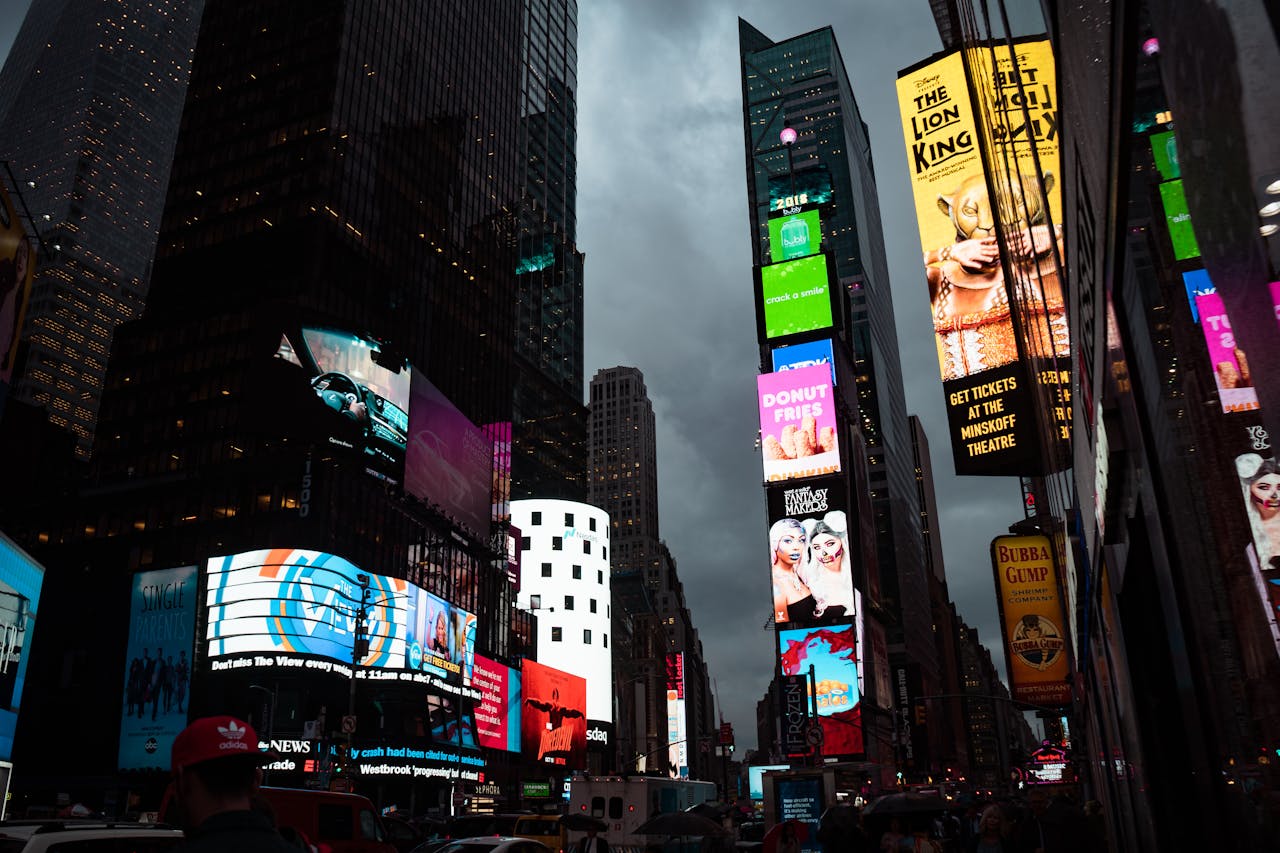
When most people think about billboard advertising, they imagine giant signs towering over highways, blinking digital boards in Times Square, or flashy posters on the side of a building. They see the design, the slogan, maybe even the humor. But what most don’t see—what almost no one talks about—is the strategy behind where those billboards are placed.
Billboard placement isn’t random. It’s not just about “a lot of people drive by here.” Behind the scenes, there’s a sophisticated mix of data analysis, psychology, urban planning, and good old-fashioned intuition that determines where those billboards go. And if you’re a brand trying to maximize your visibility, influence, and return on investment, understanding this hidden layer can be a serious competitive advantage.
Let’s pull back the curtain and look at the real strategy behind billboard placement—and why it matters more than you think.
It’s Not Just About Traffic—It’s About Type of Traffic
Sure, billboard companies love to advertise how many cars pass a location per day. But smart advertisers look deeper than that. They want to know: who is in those cars? Where are they going? What kind of mindset are they in?
A billboard on a road leading into a busy commercial district during morning rush hour is very different from one near a stadium before game time. The first might reach professionals with purchasing power, while the second could target fans primed for food, drinks, or merch. One-size-fits-all placement doesn’t cut it anymore.
This is where behavioral data comes in. Brands are now using location-based analytics to understand movement patterns. If a certain stretch of road consistently sees a high number of commuters who stop at coffee shops, or parents doing school drop-offs, brands tailor their message and their placement accordingly.
The Psychology of the Journey
There’s a reason why you often see a billboard for a fast-food restaurant a few exits before the actual location. It’s not just about giving directions—it’s about planting the idea early enough for someone to act on it.
Experienced advertisers understand the “decision curve.” A person needs time to process an ad, weigh their options, and make a choice—especially if that choice requires a turn off their usual route. Billboards that appear just before a point of decision-making are doing more than guiding drivers—they’re influencing behavior.
Similarly, on long drives, strategically placed billboards act as mental bookmarks. “Oh yeah, that exit has a Chick-fil-A.” By the time the traveler sees the restaurant itself, the decision is already made. Placement, in this case, is all about timing and psychology.
Geo-Targeting Without the Internet
In the digital world, geo-targeting is standard. You show different ads to people based on their location. But billboards were doing that long before smartphones existed.
Take, for example, a billboard advertising snow tires in a northern state—it’s going to hit harder in October than it would in Florida. But go even deeper: what about billboards advertising solar panels in communities with rising energy costs? Or luxury apartments only a few blocks from where young professionals currently live?
Billboard pros study neighborhoods the same way digital marketers study demographics. They look at local income levels, rent prices, education rates, even lifestyle habits. In doing so, they make old-school advertising incredibly modern—and incredibly relevant.
The “Halo Effect” of Prestige Locations
Some billboards aren’t about direct conversions—they’re about brand positioning. You might see a luxury brand ad in a spot where few people can afford the product. Why? Because where a brand appears affects how people perceive it.
A billboard in a trendy downtown area or an upscale shopping district carries a kind of prestige. Even if the viewers aren’t the target customers, the association with a high-status environment rubs off. This is called the halo effect, and it’s a subtle but powerful tool in brand building.
For new or lesser-known companies, placing a billboard in an aspirational area—even for a short time—can elevate their image far beyond what digital ads can accomplish. It’s not about clicks; it’s about context.
Directionality and Line of Sight
Here’s a detail that most people overlook entirely: which direction the billboard faces. Advertisers don’t just want eyes on their message—they want attention at the right moment. That means placing billboards on the correct side of the road, at eye level, angled to catch the morning sun or stand out in traffic.
There’s a reason many billboards are angled slightly rather than sitting flat. It increases visibility from a distance, creating more time for drivers to read and absorb the message.
Even nearby visual clutter matters. A billboard placed near a traffic light, for example, benefits from stopped cars. One placed near a cluttered strip mall might get lost in the noise. The pros consider not only the visibility but the entire environment around a billboard before committing to a location.
Local Culture and Context
Sometimes, placement is more art than science. Knowing the local vibe—what people value, laugh at, or talk about—can make or break a billboard’s effectiveness.
In smaller towns, for instance, people often pay closer attention to billboards because they’re one of the few rotating media sources they regularly see. In some urban neighborhoods, a clever or community-based message can generate real buzz, especially if it references local landmarks or inside jokes.
Strategic billboard placement often involves collaborating with local teams or agencies who understand the regional culture. They don’t just look at the map—they walk the streets.
Conclusion: What Looks Simple Isn’t
To the average person, a billboard is just a big sign on the side of the road. But for marketers who understand the hidden strategy, it’s a carefully chosen position in a larger brand chess game.
From traffic psychology and behavioral data to line-of-sight optimization and community insight, there’s far more happening behind the scenes than most people realize. And that’s the point—good strategy is invisible when it works.
So the next time you pass a billboard and it feels like it was meant for you, it probably was. Someone did their homework. And now that you know the strategy behind the placement, maybe you’ll see the roads a little differently.